
Claude vs. ChatGPT for Design Work: What Actually Held Up
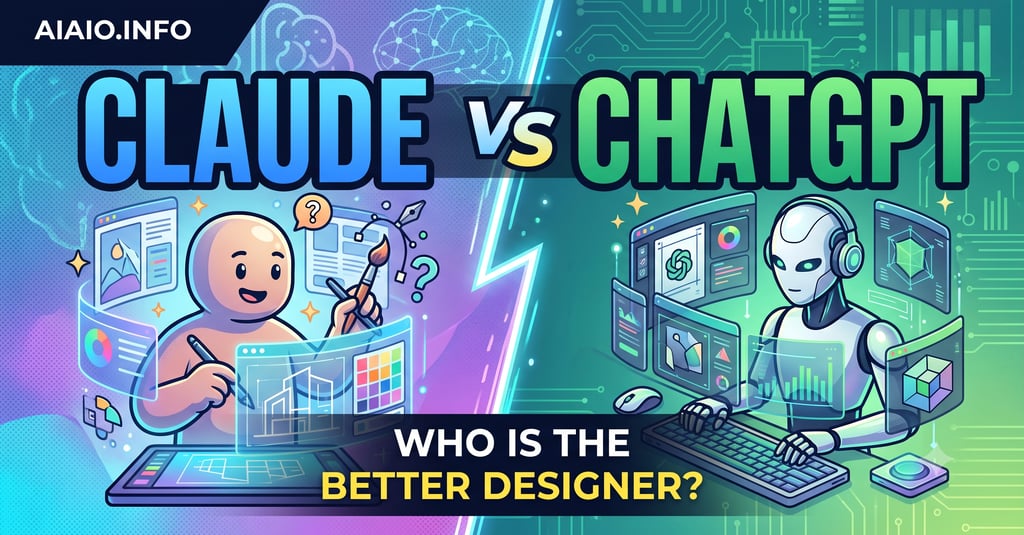
Claude has had a reputation as "the tasteful one" for a while now. A recent head-to-head test from Staying Ahead with AI, comparing the two on real design briefs, is worth a look for anyone using either tool for client-facing work.
Claude vs. ChatGPT for Design Work: What Actually Held Up
Claude has had a reputation as "the tasteful one" for a while now. A recent head-to-head test from Staying Ahead with AI, comparing the two on real design briefs, is worth a look for anyone using either tool for client-facing work.
Three tests, three different winners
A landing page brief: ChatGPT delivered something that read like a studio built it — restrained, professional, ready to publish. Claude leaned hard into one big visual idea that, after a while, felt more like a costume than a finished page.
A personal finance dashboard: ChatGPT overbuilt—it asked for a simple spending tracker and delivered something closer to a full banking product. Claude built exactly what was asked for, with a small, usable interface. One detail stood out: the placeholder text in Claude's expense form said "Swiggy dinner"—a small but telling read of the room.
A kid's birthday invite: Claude wrote out a genuine design rationale before producing something polished and restrained. ChatGPT just made something loud, colorful, and—by the test's own account—the one an actual six-year-old would pick every time.
The takeaway isn't "which is better?"
It's that both models have a default style, and that style doesn't fit every brief. Claude's restraint is a strength for professional, minimal work and a mismatch for anything that wants energy or playfulness. ChatGPT's tendency to fill out and elaborate is the opposite trade-off.
Why this is useful if you're using AI for client work
If you're producing landing pages, decks, or client-facing visuals with AI tools, it's worth testing the same brief across more than one model before you commit to a workflow. The "best" model isn't fixed—it depends on whether the brief calls for restraint or energy.
Takeaway: Don't assume brand reputation ("Claude is more tasteful," "ChatGPT overdoes it") holds for your specific brief. Test both, especially for one-off client deliverables where the wrong tone matters.