
Your AI Assistant Behaves Differently in Hindi Than in English — Here's Why That Matters
Here's a genuinely surprising finding, covered recently by Staying Ahead with AI: ask Claude for honest feedback on a business plan in Hindi, and you'll likely get an encouraging, softened response.
Your AI Assistant Behaves Differently in Hindi Than in English—Here's Why That Matters
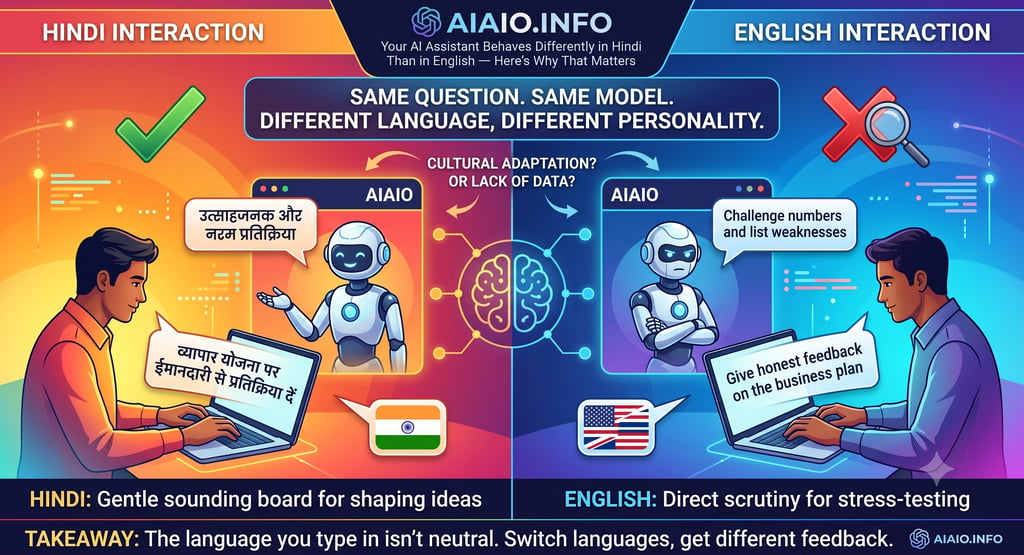
Here's a genuinely surprising finding, covered recently by Staying Ahead with AI: ask Claude for honest feedback on a business plan in Hindi, and you'll likely get an encouraging, softened response. Ask the identical question in English, and the same model will challenge your numbers and list out weaknesses directly.
Same question. Same model. Different language, different personality.
Where this comes from
Anthropic's own research measured this across their models and the most common languages on their platform, tracking traits like directness, caution, and warmth. The gaps were real but modest—language explains roughly 15% of the variation in how the model responds, so think of it as a mood shift, not a different assistant entirely.
Anthropic's own honest answer for why it happens: they don't fully know. It could be about how much training data exists in each language, or the tone of professional writing the model learned from, or the model genuinely adapting to cultural conversational norms. Some of those explanations are a reasonable feature; others would be closer to a genuine equity problem. Right now, nobody — including Anthropic — can say for certain which it is.
Why this is actually useful, not just interesting
If you regularly switch between Hindi and English when working with AI tools (which describes a lot of us), this explains something you may have half-noticed already: the tool feels like a different collaborator depending on which language you use.
Practically:
Want your pitch or plan stress-tested? Ask in English — you'll get closer scrutiny.
Still shaping a rough idea and want a more encouraging sounding board? Hindi will likely be gentler with you.
Neither is "wrong"—they're just different modes, and until this research, most people didn't know the option existed.
Takeaway: the language you type in isn't neutral. If you're not getting the kind of feedback you need from an AI tool, switching languages might change the answer more than rewording the question will.